Diet & Digestion
The six tastes: a framework for building a meal
Classical Ayurvedic dietetics organises food by taste and holds that a meal should contain all six. As a practical cooking heuristic it works better than the underlying theory would suggest.
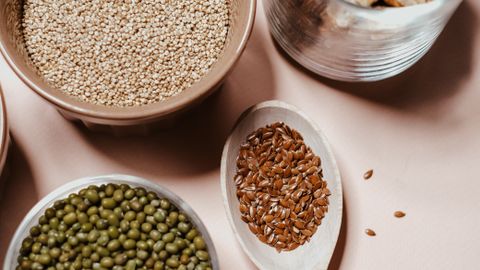
Classical Ayurveda categorises food by rasa — taste — and identifies six: sweet, sour, salty, pungent, bitter and astringent.
Each is associated with particular effects on the doshas, and the general instruction is that a meal should contain all six, with proportions adjusted to constitution, season and current state.
The six, and what they include
Sweet covers considerably more than sugar. Grains, most dairy, many fruits, root vegetables, oils, meat and nuts fall in this category, which in practice makes it the base of most meals.
Sour — citrus, tamarind, yoghurt, fermented foods, vinegar, tomato.
Salty — salt, and salty ingredients such as seaweed and preserved foods.
Pungent — chilli, black pepper, ginger, garlic, mustard, onion, many spices.
Bitter — leafy greens, bitter gourd, fenugreek, turmeric, coffee, many herbs.
Astringent — legumes, unripe banana, pomegranate, tea, some vegetables. Astringency is a mouthfeel — the drying, puckering sensation from tannins — rather than a taste in the sensory sense.
Where the taste framework sits relative to sensory science
Contemporary sensory science identifies five basic tastes with established receptor mechanisms — sweet, sour, salty, bitter and umami.
The Ayurvedic six overlap partially. Pungency is not a taste but a chemesthetic sensation, mediated by receptors that also detect temperature and pain. Astringency is a tactile sensation caused by tannins binding to proteins in saliva.
Umami does not appear as a separate category in the classical scheme; foods high in it fall under sweet.
So the classical categories are a sensory classification rather than a physiological one, and they include sensations from more than one system. That is not a defect — it is a practical categorisation of eating experience rather than an anatomy of the tongue.
Why the six-taste instruction works as cooking advice
Set the theory aside and the instruction is a good one.
A meal containing all six will, almost inevitably, contain vegetables — because bitter and astringent come mainly from vegetables, legumes and greens. Most people do not eat enough of these.
It will contain some acidity, which improves the perception of everything else and is a standard technique in professional kitchens.
It will contain aromatics and spices rather than being bland.
And it will be varied, which is the single most reliable general dietary recommendation there is — dietary diversity is associated with better nutritional adequacy across essentially every population studied.
The instruction to include all six is, in effect, a way of preventing a meal from being three beige things.
Bitter, specifically
The taste most people avoid, and the classical framework insists on it.
Bitter compounds in plants include a wide range of phytochemicals, and the vegetables highest in them — brassicas, dark leafy greens, bitter melon — are among the more nutritionally dense foods available.
Bitterness perception is genetically variable, and some people are markedly more sensitive to it. That variation affects vegetable intake and is a real reason some people find greens unpleasant rather than a matter of willpower.
Practical approaches to bitter vegetables — salting, blanching, pairing with fat and acid — are standard technique in the cuisines that use them most.
The dosha assignments
Each taste is assigned effects on each dosha: sweet, sour and salty increasing kapha; pungent, bitter and astringent increasing vata; and so on, with a full set of relationships in the classical texts.
These assignments are internal to the theoretical framework and there is no external evidence for them as physiological claims.
Some of the derived practical advice is nonetheless reasonable — recommending warming, cooked, oilier food for someone who is cold, dry and unsettled is sensible regardless of the underlying model.
How to use it
As a checklist while cooking rather than as a rule.
Look at what you are making and ask which of the six are present. If bitter and astringent are missing, which they usually are, add a green vegetable or a legume. If sour is missing, add lemon or yoghurt.
That takes ten seconds, requires no belief in the underlying theory, and reliably improves both the nutritional profile and the taste of a meal.
The classical proportions and constitutional adjustments are a further layer, and someone who wants to work with them should do so with a practitioner rather than from a chart.
Dietary changes for a diagnosed condition should be discussed with a doctor or registered dietitian.
Also by Meera Kulkarni
- Breath practice for anxiety: the specific thing to doYoga & Breath
- Cooking oils: the classical selections and the current evidenceDiet & Digestion
- Drinking with meals, and the classical instructions about waterDiet & Digestion
- The evening routine and winding downDaily Routine