Yoga & Breath
Breath practice for anxiety: the specific thing to do
Of everything discussed on this site, slow breathing has the best combination of evidence, accessibility and safety. Here is the practical version.

Across the practices covered on this site, slow controlled breathing has the best ratio of evidence to cost. It requires nothing, takes minutes, has a documented physiological mechanism, and reasonable trial support for anxiety.
This article is the practical version.
The mechanism, briefly
Breathing rate influences autonomic balance directly. Heart rate rises on inhalation and falls on exhalation, and lengthening the exhalation relative to the inhalation shifts the balance toward parasympathetic activity.
Breathing at approximately six breaths per minute produces a resonance effect between breathing and cardiovascular rhythms, generating a large increase in heart rate variability. This is well documented and reproducible.
The practical implication is that a specific pace matters more than any particular technique.
The basic practice
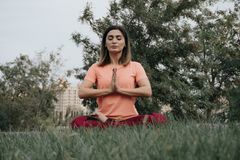
Sit or lie comfortably. Breathe through the nose if possible.
Breathe in for a count of four. Breathe out for a count of six. That produces a rate of six breaths per minute, which is the target.
Let the breath be comfortable rather than deep. Straining to take large breaths is counterproductive and can cause light-headedness.
Continue for five to ten minutes.
That is the whole practice. Everything else is variation.
Useful variations
Longer exhalation. Four in, eight out, if comfortable. The extended exhalation is the active component.
A brief pause after the exhalation, without straining. Four in, six out, two pause.
Counting gives the mind something to do, which for many people is the difference between a practice that settles them and one that becomes a period of rumination.
Hand on the abdomen to encourage diaphragmatic rather than upper chest breathing, which is a common pattern in anxiety.
Physiological sigh, which has attracted research interest: a double inhalation through the nose followed by a long exhalation through the mouth. Some trials report it as effective as, and in some measures better than, other breathing patterns for reducing anxiety. Useful for acute moments because it works quickly.
For acute anxiety or panic
Slow breathing helps and there are practical points.
In panic, breathing is typically rapid and shallow, producing hyperventilation. The resulting drop in carbon dioxide causes tingling, light-headedness and a sense of unreality — symptoms that are themselves frightening and drive further hyperventilation.
Slowing the breath addresses the mechanism directly, and it is difficult to do while panicking, which is why the practice needs to be established beforehand.
Practising daily when calm builds the skill so it is available under stress. Attempting it for the first time during a panic attack usually fails.
When breathing practice is not appropriate
Focusing on the breath makes anxiety worse for some people. This is real and reported. For those people, external focus — grounding through sight, sound and touch, or physical movement — works better.
If attending to your breathing consistently increases distress, use something else. There is no obligation.
Trauma. Interoceptive focus can be destabilising for some people with trauma histories. Trauma-informed approaches offer choice about eye closure, position and focus, and are preferable.
Respiratory conditions. Anyone with asthma or COPD should introduce breathing practices in consultation with their clinician, and should not reduce prescribed medication.
Forceful and rapid techniques — kapalabhati, bhastrika and similar — are not appropriate for anxiety and are contraindicated in a range of conditions, discussed elsewhere on this site. Slow breathing is the relevant practice here.
What it is and is not
Slow breathing is a useful tool for managing acute anxiety and for general regulation. Trials support modest effects.
It is not a treatment for an anxiety disorder. Cognitive behavioural therapy has substantial evidence and is first-line in clinical guidance for anxiety disorders. Medication has evidence where appropriate.
Someone with a diagnosed anxiety disorder should have proper treatment, with breathing practice as an addition rather than a substitute.
The other things with evidence
Worth listing, since they are frequently more effective than breathing alone.
Exercise, with a reasonable body of evidence for anxiety symptoms.
Sleep, where deprivation reliably worsens anxiety and improvement helps.
Reducing caffeine, which is frequently overlooked and can be substantial. Caffeine sensitivity varies and in susceptible people it produces symptoms indistinguishable from anxiety.
Reducing alcohol, which worsens anxiety over the following days despite acute relief.
Psychological therapy, which has the best evidence of anything.
The practical summary
Five minutes daily, four in and six out, sitting comfortably. Build the habit when calm so the skill exists when needed.
Add the physiological sigh for acute moments.
Address caffeine, alcohol, sleep and exercise, which do more.
And get proper treatment if anxiety is persistent and affecting your life, because effective treatment exists.
Persistent anxiety affecting daily life warrants medical assessment. Do not reduce prescribed treatment. If breath focus increases distress, use a different approach.
Also by Meera Kulkarni
- Cooking oils: the classical selections and the current evidenceDiet & Digestion
- Drinking with meals, and the classical instructions about waterDiet & Digestion
- The evening routine and winding downDaily Routine
- Honey: the classical instructions and the evidenceDiet & Digestion