Diet & Digestion
Honey: the classical instructions and the evidence
Classical texts treat honey with unusual specificity, including a prohibition on heating it that corresponds to a real chemical change, and one absolute safety rule.
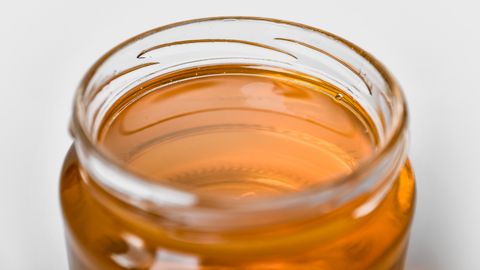
Honey occupies a distinctive place in classical Ayurvedic dietetics. It is described as having properties different from other sweet substances, is used as a vehicle for other preparations, and comes with specific instructions.
The safety rule that comes first
Honey must not be given to infants under twelve months.
Honey can contain Clostridium botulinum spores. Adults and older children handle these without difficulty; infants under a year have not yet developed the gut flora to prevent germination, and infant botulism can result.
Infant botulism is a serious illness causing weakness, poor feeding, constipation and respiratory difficulty, and it requires hospital treatment.
This applies to all honey including raw, pasteurised and organic. It is a firm rule with no exceptions, and it is worth stating because traditional practice in some places includes giving honey to newborns.
The heating prohibition
Classical texts advise against heating honey, describing heated honey as harmful.
This turns out to correspond to a genuine chemical change. Heating honey increases levels of hydroxymethylfurfural, a compound formed from sugars under heat and acidic conditions.
Hydroxymethylfurfural content is used commercially as an indicator of honey freshness and of whether it has been heated or stored poorly, and standards specify limits.
Whether dietary levels are harmful to humans is not established. The compound has been studied and the evidence for harm at the levels found in food is limited.
So the classical observation identifies a real change while the harm claim is not confirmed. That is an interesting middle position, and more defensible than either uncritical acceptance or dismissal.
Practically: adding honey to warm rather than boiling liquid preserves flavour and some heat-sensitive components, and there is no strong reason to be anxious about honey in hot tea.
Where the evidence is genuinely good
Cough in children. This is the application with the best evidence. Systematic reviews have found honey more effective than no treatment and comparable or superior to some over-the-counter cough preparations for reducing cough symptoms in children with upper respiratory infection.
Clinical guidance in several countries recommends honey for cough in children over one year, partly because it works modestly and partly because over-the-counter cough medicines have poor evidence and are not recommended for young children.
Again: not under twelve months.
Wound care. Medical-grade honey is used in clinical wound management, and there is a reasonable evidence base including for burns and certain wound types.
The mechanisms are established: low water activity, acidity, hydrogen peroxide generation, and in some honeys additional antibacterial compounds.
Crucially, this is medical-grade sterilised honey, not the jar in your kitchen. Ordinary honey applied to a wound introduces spores and is not appropriate.
Oral mucositis during cancer treatment, where some studies report benefit.
The claims that are weaker
Local honey for allergy. The theory is appealing and the evidence does not support it. Studies have generally not found benefit, and the mechanism is doubtful — pollen causing hay fever is wind-borne, while honey contains mainly insect-pollinated flower pollen.
General antimicrobial and health benefits from oral consumption, where laboratory activity does not translate into demonstrated clinical effect.
Specific premium honeys commanding very high prices, where the antibacterial activity is real and demonstrated in laboratory testing, and where the clinical evidence for consuming it is limited. Adulteration and mislabelling in this market are documented problems.
Honey is sugar
The point that gets lost. Honey is predominantly fructose and glucose, and it is metabolised as sugar.
Its glycaemic index is somewhat lower than table sugar and it contains trace amounts of other compounds, and these differences do not make it a health food.
Anyone with diabetes should treat honey as they would other sugars. Anyone managing energy intake should count it.
The classical texts, notably, describe honey as suitable in kapha conditions and in small quantities, and specify moderation. They do not present it as unlimited.
The classical combinations
Honey is used as an anupana — a vehicle — for delivering other preparations, and specific combinations are prescribed.
The classical prohibition on combining honey with equal quantities of ghee is frequently cited. There is no established mechanism for harm from this combination, and it is one of the classical incompatibility claims that has not been substantiated.
The practical version
Honey for cough in children over one, where it has evidence and is pleasant.
Never for infants under one.
Medical-grade honey for wounds, in a clinical setting, not from the kitchen.
Otherwise, treat it as a sugar you happen to like, use it in moderation, and do not heat it to boiling if you do not need to.
Never give honey to a child under twelve months. Do not apply kitchen honey to wounds. People with diabetes should count honey as sugar.
Also by Meera Kulkarni
- Breath practice for anxiety: the specific thing to doYoga & Breath
- Cooking oils: the classical selections and the current evidenceDiet & Digestion
- Drinking with meals, and the classical instructions about waterDiet & Digestion
- The evening routine and winding downDaily Routine