Yoga & Breath
Yoga injuries and how to practise without acquiring one
Yoga is generally safe and injury rates are not zero. The pattern of injuries is well enough documented that most of them are avoidable.
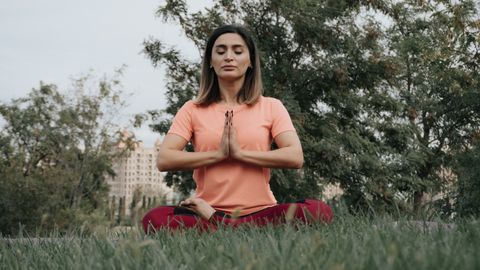
Yoga is a low-risk activity and it is not risk-free. Studies of injury rates report figures broadly comparable to other forms of exercise, with the pattern of injuries reasonably consistent across surveys.
Knowing where injuries occur removes most of them.
The common injury sites
Wrists. Weight-bearing on the hands with the wrist extended, repeated many times in a session. Common in styles with frequent transitions through plank and downward dog.
Reduce by spreading the fingers and pressing through the whole hand rather than the heel, using a wedge or blocks, practising on fists, and reducing volume of hand-weight-bearing if symptoms appear.
Shoulders. The lowering from plank is the single most implicated movement. Repeated with elbows flared and shoulders dropping below elbow height, at high volume, over months.
Reduce by keeping elbows close to the ribs, stopping the lowering before the shoulders drop below elbow level, dropping the knees, and reducing repetitions.
Hamstrings. Proximal hamstring tendinopathy at the sitting bone is a well-recognised yoga injury, from repeated stretching into deep forward folds, frequently with sustained holds.
It is slow to develop and notoriously slow to resolve. The pattern is that people stretch further into it because it feels tight, which is exactly the wrong response to an irritated tendon under compression.
Reduce by not forcing forward folds, bending the knees, and by loading the hamstring with strength work rather than only stretching it.
Lower back. Repeated loaded flexion and deep backbends. Reduce by bending the knees in folds, distributing extension through the thoracic spine rather than only the lumbar, and avoiding twisting under load in flexion.
Neck. Headstand and shoulder stand load the cervical spine, which is not designed to bear body weight. Injuries here are less common and potentially more serious.
These postures are frequently taught to beginners and there is no particular reason they should be. Anyone with cervical spine problems should avoid them entirely.
Knees. Cross-legged and lotus positions rotate the hip, and where hip rotation is limited, the rotation is taken at the knee, which does not tolerate it. Meniscal injuries from forcing lotus are documented.
Sit on a support to raise the hips, and never force the knee toward the floor.
The risk factors
Being adjusted by an instructor. Physical adjustment removes your own feedback about what is tolerable, and it is implicated in a meaningful proportion of reported injuries.
You are entitled to decline adjustment. Many studios now offer consent cards for this. A teacher who adjusts without asking, or who pushes you further into a position, is a teacher to avoid.
Competitiveness, including with oneself. Attempting a posture because others in the class are doing it is a reliable route to injury.
Hypermobility. Hypermobile people can reach extreme ranges easily, which makes them appear accomplished and puts joints in vulnerable positions without the strength to control them.
Hypermobile practitioners generally need to work on strength and control at mid-range rather than pursuing further range, and this is frequently the opposite of what they enjoy and what they are praised for.
High volume. Daily intensive practice without variation, particularly of the same sequence, is where overuse injuries appear.
Heated classes, where heat increases perceived flexibility and can allow people to move beyond safe range, and where dehydration and heat illness are additional considerations.
The specific medical contraindications
Glaucoma and retinal problems: avoid inversions and head-down positions.
Uncontrolled hypertension and cardiovascular disease: avoid inversions, prolonged breath retention and vigorous rapid sequences without medical advice.
Osteoporosis: avoid loaded spinal flexion and forced twisting, which carry vertebral fracture risk.
Pregnancy: substantial modification needed; seek a prenatal-qualified teacher.
Recent surgery, hernia, retinal detachment history, and various other conditions: discuss with a doctor.
Choosing a teacher
Teacher training in yoga is unregulated in most countries. Common qualifications represent a few weeks of training, which is a starting point rather than a clinical qualification.
Signals of a good teacher: asks about injuries and conditions before class, offers modifications routinely, asks before touching, does not push people further, does not present postures as achievements, and is comfortable with students doing something different.
Signals to avoid: physical adjustments without consent, competitive framing, claims about therapeutic effects that go beyond the evidence, and discouraging students from modifying.
The general principle
Range of motion is not the goal, and further is not better. What produces benefit is regular practice within a range you control.
Pain during a posture is information. Sharp pain, joint pain, and any pain that persists afterward means stop and modify.
Discuss practice with a doctor if you have glaucoma, uncontrolled hypertension, cardiovascular disease, osteoporosis, or a spinal condition. Persistent pain following practice warrants assessment rather than continued stretching.
Also by Sanjay Iyer
- The placebo question, taken seriouslyEvidence Watch
- Diuretic herbs and the kidneyHerbs & Formulations
- Arjuna and the heart claimsHerbs & Formulations
- Cancer claims: the most important thing on this site to get rightEvidence Watch