Yoga & Breath
Asana in Ayurveda is not the same thing as a yoga class
The physical postures most people associate with yoga occupy a smaller place in classical texts than in modern practice, and the way Ayurveda uses them has a different emphasis.
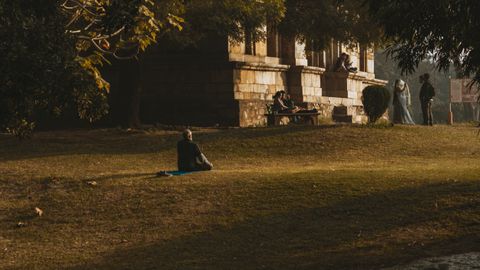
Modern postural yoga — the sequences of physical postures taught in studios worldwide — has a documented history, and it is shorter and more complicated than the framing usually presented.
Understanding it clarifies what Ayurvedic texts actually recommend and what they do not.
What the classical sources contain
The Yoga Sutras of Patanjali devote very little to physical posture. Asana appears as one of eight limbs, and the discussion of it is brief — the relevant instruction concerns a seat that is steady and comfortable, in the context of preparation for meditation.
Later hatha yoga texts describe a larger number of postures, along with cleansing practices, breath control and other techniques. The number of postures described in these texts is modest by contemporary standards, and many are seated.
The Ayurvedic compendia themselves say relatively little about asana specifically. They recommend exercise, in moderation, adjusted to constitution, season and state of health — which is a broader instruction than any particular practice.
The modern history
Scholarship over the past few decades has examined how contemporary postural yoga developed, and the picture involves considerably more twentieth-century synthesis than is generally acknowledged.
Influences identified include Indian physical culture movements, European gymnastics traditions, and the teaching of a small number of highly influential teachers in the twentieth century whose students went on to found most of the major modern lineages.
The flowing sequences, the emphasis on standing postures, and the format of a class of a particular length are largely modern developments.
None of this diminishes the practice. It does mean that claims of unbroken transmission of specific sequences from antiquity are not supported, and that presenting a modern class as an ancient practice is inaccurate.
How Ayurveda approaches physical practice
The emphasis is individualisation and moderation.
Moderation. The classical instruction is to exercise to roughly half of capacity, indicated by sweat appearing and by the onset of mouth breathing, rather than to exhaustion.
This is more conservative than contemporary exercise guidance, which supports higher intensities for cardiovascular and metabolic benefit in healthy people. The classical position is a reasonable default for those who are unwell, frail, elderly or deconditioned, and should not be read as a general argument against training.
Adjustment to constitution and state. The general principle is to counter rather than reinforce a tendency — cooling, slower practice for a heated state; warming, more vigorous practice for a heavy, sluggish one; grounding, steady practice for an unsettled one.
Adjustment to season, with lighter practice in hot seasons and more vigorous practice in cold ones.
Timing, generally in the morning, on an empty stomach.
What the evidence says about yoga generally
Yoga as practised in modern studios has been studied reasonably extensively as a physical activity intervention.
The evidence is reasonably supportive for improvements in flexibility, balance and strength, for reductions in low back pain, and for modest benefits in stress, anxiety and depressive symptoms. Guidelines in several countries include exercise-based approaches such as yoga among options for chronic low back pain.
Trial quality varies, blinding is not possible, and comparisons are frequently against no intervention rather than against other forms of exercise. Where yoga has been compared with other exercise, differences are generally small — which suggests much of the benefit is attributable to physical activity rather than to anything specific.
Safety
Yoga is generally safe and injuries do occur, most commonly to wrists, shoulders, knees, hamstrings, neck and lower back.
The higher-risk situations are advanced postures attempted without preparation, headstands and shoulder stands, deep backbends, and being pushed into a position by an instructor.
Specific cautions: anyone with glaucoma or retinal problems should avoid inversions; anyone with uncontrolled hypertension or cardiovascular disease should discuss practice with a doctor; hypermobile individuals should be careful about pushing into end range, which is easy to do and not beneficial; and anyone with osteoporosis should avoid loaded spinal flexion.
Pregnancy has its own considerations and warrants a suitably qualified teacher.
The practical version
A regular, moderate physical practice adjusted to how you are, on most days, is supported both by the classical framework and by contemporary evidence about physical activity.
Whether it takes the form of a yoga class, a walk, resistance training or something else matters less than doing it consistently and not injuring yourself.
Discuss new exercise with a doctor if you have cardiovascular disease, uncontrolled hypertension, eye conditions, osteoporosis, or are pregnant.
Also by Dr. Anjali Deshmukh
- Using both: how to combine Ayurveda with conventional careDosha & Constitution
- Children: traditional practices and what to be careful aboutDaily Routine
- Choosing a practitioner: what to look for and what to askEvidence Watch
- Mind in the classical framework, and mental health care nowDosha & Constitution