Yoga & Breath
Pranayama: what the breathing practices do, as far as anyone can tell
Controlled breathing has measurable physiological effects, a reasonable body of trial evidence for some outcomes, and a set of specific safety considerations that are rarely mentioned.
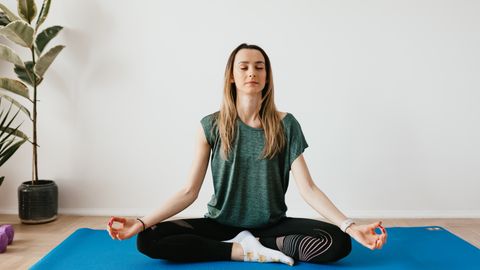
Pranayama refers to the breath practices of the yogic tradition, adopted into Ayurvedic practice. There are many named techniques, differing in rhythm, ratio, nostril use, retention and force.
Breathing is one of the few autonomic functions under voluntary control, which makes it a plausible route to influencing autonomic state. The research is more developed here than in many areas of traditional practice.
The physiology that is reasonably well established
Slow breathing affects heart rate variability. Breathing at around six breaths per minute produces a marked increase in heart rate variability and a resonance effect between breathing and cardiovascular rhythms. This is a robust and repeatedly demonstrated finding.
Extended exhalation shifts autonomic balance. Heart rate slows on exhalation and rises on inhalation. Practices with longer exhalations than inhalations produce a measurable shift toward parasympathetic dominance.
Slow breathing lowers blood pressure acutely, and some trials report modest sustained reductions with regular practice, though the magnitude and durability vary between studies.
These are mechanisms rather than clinical outcomes, and it is worth keeping the distinction.
The clinical evidence
Anxiety and stress. The area with the most supportive trial evidence. Multiple randomised trials and several meta-analyses report reductions in anxiety measures with slow breathing practices, with effect sizes generally in the small to moderate range.
Trial quality is variable, blinding is essentially impossible, and expectation effects are likely to be substantial. Even so, the direction is consistent and the intervention is low-risk.
Asthma. Breathing techniques have been studied in asthma, and reviews have found improvements in symptoms and quality of life measures without consistent improvement in objective lung function. Importantly, breathing exercises are an adjunct and are not a substitute for prescribed inhaled therapy.
Chronic obstructive pulmonary disease, where pursed-lip and diaphragmatic breathing are already part of standard pulmonary rehabilitation.
Hypertension, where device-guided slow breathing has been studied with modest results and where the evidence is not strong enough for it to displace standard management.
Sleep, where slow breathing before bed has some supportive evidence for sleep onset.
Alternate nostril breathing specifically
Nadi shodhana has attracted particular research interest, and there is a set of studies reporting effects on autonomic measures and on cognitive tasks.
The literature is dominated by small studies from a limited number of centres, and independent replication is thin. The claim that breathing through one nostril selectively activates one cerebral hemisphere is not well supported.
There is a real phenomenon underlying some of this — the nasal cycle, in which airflow alternates between nostrils over hours — and it is documented. What it means functionally is much less clear.
The safety points, which get skipped
Most pranayama is safe. Some practices are not universally so, and this is under-discussed.
Forceful and rapid techniques — kapalabhati, bhastrika — produce hyperventilation, which lowers carbon dioxide and can cause dizziness, tingling, and in some cases fainting. Cases of more serious events have been reported. These practices are generally contraindicated in pregnancy, uncontrolled hypertension, heart disease, recent abdominal surgery, hernia, epilepsy, glaucoma and detached retina.
Breath retention raises intrathoracic pressure and blood pressure transiently. Caution in cardiovascular disease, glaucoma and pregnancy.
Extended retention or hyperventilation in water is genuinely dangerous. Hyperventilation before breath-holding suppresses the urge to breathe without adding meaningful oxygen, which is the mechanism of shallow water blackout. Never combine breath practices with swimming or diving.
Anyone with a respiratory condition should introduce practices in consultation with their clinician and should not reduce prescribed medication.
What is reasonable to do
Slow breathing at around six breaths per minute, with a longer exhalation than inhalation, for five to ten minutes daily, is well supported for stress and anxiety, has minimal risk, costs nothing and requires no equipment.
That is a substantial fraction of the available benefit from the simplest possible practice.
More elaborate techniques are worth learning from a competent teacher who asks about your health before assigning them, which is the main marker of a teacher worth learning from.
Do not alter prescribed treatment for asthma, COPD, hypertension or any other condition on the basis of breathing practice. Discuss vigorous techniques with a doctor if you have any of the conditions listed above.
Also by Sanjay Iyer
- The placebo question, taken seriouslyEvidence Watch
- Diuretic herbs and the kidneyHerbs & Formulations
- Yoga injuries and how to practise without acquiring oneYoga & Breath
- Arjuna and the heart claimsHerbs & Formulations