Daily Routine
Children: traditional practices and what to be careful about
Ayurveda has a branch dealing with children, and several traditional practices for infants carry documented risks that are worth knowing precisely.
Kaumarabhritya is the classical branch dealing with children, and traditional practices around infants and young children are widespread and culturally significant.
Children are also the group most vulnerable to harm from several traditional practices, and this article is more weighted toward caution than most on this site.
The practices to avoid entirely
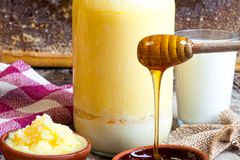
Honey before twelve months. Risk of infant botulism. This applies to all honey, and it is an absolute rule.
Neem oil internally. Documented poisoning syndrome in infants with fatalities reported. Never give neem oil to a child internally.
Traditional kajal and kohl. Repeatedly found to contain high levels of lead, with documented cases of lead poisoning in children. Do not apply to children's eyes.
Metal-containing preparations. Rasa shastra products should not be given to children.
Any preparation of unknown composition. Children's smaller size means a given contaminant dose is proportionally larger, and their developing nervous systems are more vulnerable to lead and mercury.
Herbal remedies for infants generally, without paediatric medical advice. Several traditional infant preparations have been associated with harm, and dosing in infants is not a scaled-down version of adult dosing.
The practices with reasonable evidence
Infant massage. Traditional across many cultures and reasonably well studied.
Evidence in preterm infants is the strongest, with studies reporting improved weight gain and reduced hospital stay. In term infants, evidence supports improved sleep and reduced crying in some studies, with effects being modest.
Practical points: use a plain oil appropriate for infant skin, avoid essential oils and fragranced products, avoid the face and eyes, and stop if the skin reacts.
Some oils are better tolerated than others on infant skin, and there is research suggesting differences between them in effects on the developing skin barrier. Where in doubt, ask a health visitor or paediatrician.
Skin-to-skin contact and kangaroo care, which is not specifically Ayurvedic and has substantial evidence, particularly in preterm and low birth weight infants where it reduces mortality.
Breastfeeding support, emphasised in classical texts and strongly supported by contemporary evidence.
The practices requiring care
Swaddling. Traditional in many cultures. Contemporary guidance is more nuanced: it may help settle infants and it carries specific risks.
Tight swaddling of the legs is associated with developmental dysplasia of the hip, and hips should be able to move freely. Swaddling also increases risk if an infant rolls to the prone position, and should stop when a baby shows signs of rolling. Overheating is a further concern.
Head shaping practices. Some traditional practices involve moulding the infant's head. These have no benefit and can cause harm.
Feeding practices before six months. Giving water, honey, ghee or other substances to infants before six months is traditional in some settings and is not recommended — exclusive breastfeeding for around six months is standard guidance, and early introduction of fluids displaces milk and carries infection risk.
Oil in the ears or nose. Not recommended without medical advice. Anything placed in an ear risks harm if there is a perforation, and infants cannot report pain reliably.
Fever and illness in children
Worth addressing specifically because this is where delays cause harm.
Seek urgent medical attention for: a fever in a baby under three months; a child who is unusually drowsy, floppy or difficult to rouse; a rash that does not fade when pressed; difficulty breathing, grunting or rapid breathing; a stiff neck or dislike of light; a seizure; persistent vomiting or signs of dehydration including reduced wet nappies; or a child who simply appears seriously unwell.
Parental instinct that something is seriously wrong is a recognised and valid clinical signal.
Managing a seriously ill child with traditional remedies rather than seeking care is where the most serious harms occur, and it is worth being direct: infections in children can progress within hours.
Vaccination
Vaccination has substantial evidence and prevents diseases that killed and disabled large numbers of children within living memory.
There is no conflict between traditional practice and vaccination, and no basis in the classical texts for declining it. Claims that a strong constitution makes vaccination unnecessary are not supportable — protection against a specific pathogen requires specific immunity.
Follow the schedule recommended where you live.
What traditional practice offers
The classical emphasis on routine, on feeding, on massage, on the mother's rest and nutrition, and on attentive care of the infant is valuable and compatible with everything above.
The practices to keep are the gentle, external, relational ones. The practices to leave are anything given internally to an infant without medical advice.
Seek urgent medical care for a fever in a baby under three months, a non-blanching rash, breathing difficulty, unusual drowsiness or a child who seems seriously unwell. Never give honey to a child under one, or neem oil internally to a child at any age.
Also by Dr. Anjali Deshmukh
- Using both: how to combine Ayurveda with conventional careDosha & Constitution
- Choosing a practitioner: what to look for and what to askEvidence Watch
- Mind in the classical framework, and mental health care nowDosha & Constitution
- Pregnancy and postnatal traditions: what is helpful and what is notDaily Routine