Herbs & Formulations
Sesame Oil As The Default Base For Medicated Oils
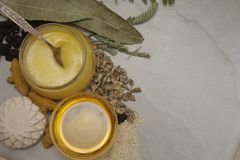
Most classical medicated oils are built on sesame, chosen for described properties and for chemical stability, and the base is treated as part of the medicine rather than a carrier.
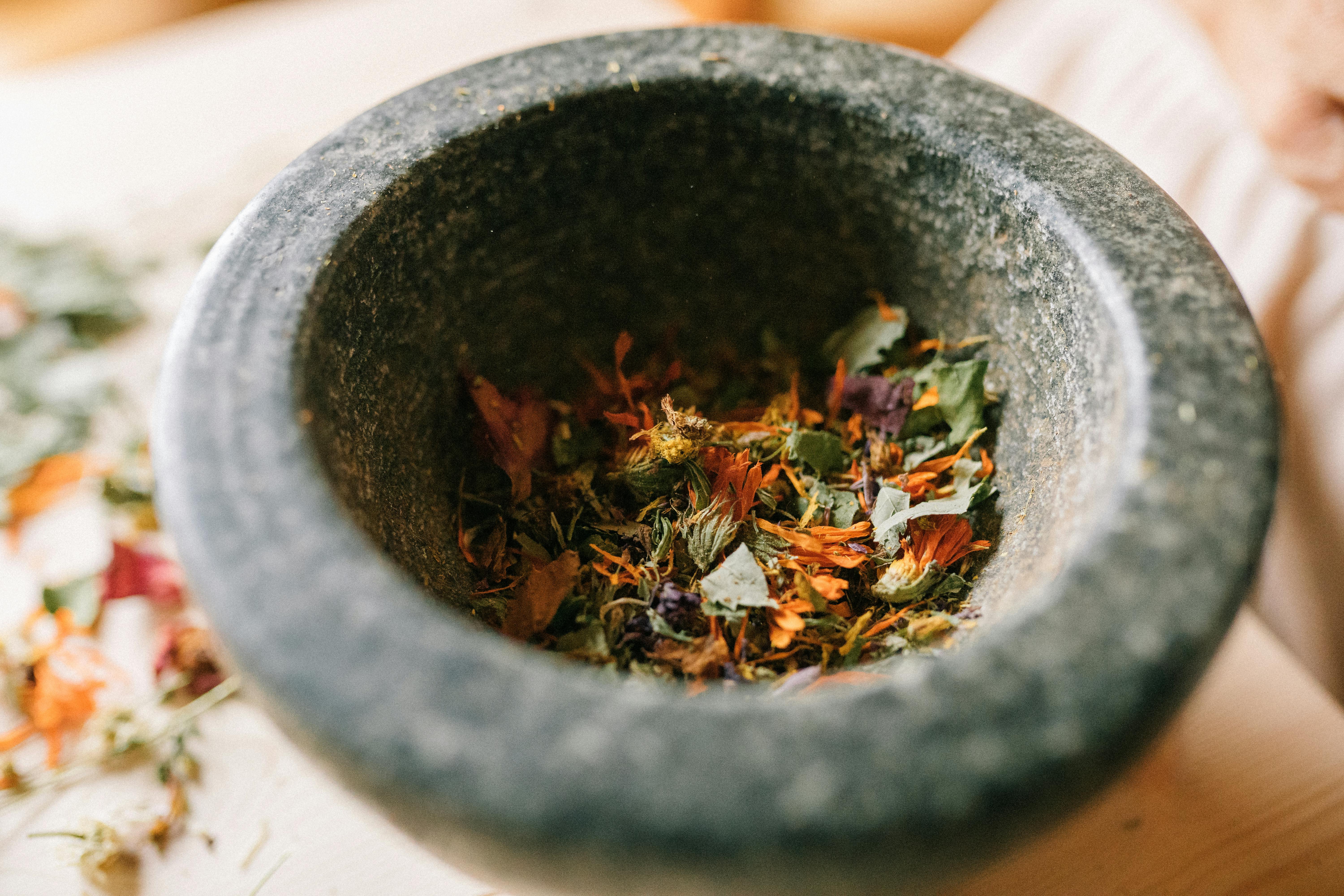
Open almost any classical oil preparation and the base is sesame. The choice is consistent enough across the literature that it is worth asking what the base is understood to contribute.
How a medicated oil is made
Plant material is simmered with oil and a water portion until the water has driven off, transferring fat-soluble components into the oil. The process is slow and repeated in some preparations.
The endpoint is judged by traditional tests involving the residue and the appearance of the oil. Those tests are practical checks on completion rather than measurements of concentration.
What results is neither a simple infusion nor an extract in the modern sense. The tradition treats the finished oil as a distinct substance with its own name and description.
Why sesame rather than another oil
The classical account describes sesame as warming, penetrating and suited to the qualities attributed to vata. Those descriptions are the tradition's own vocabulary and are not physiological claims.
There is a practical dimension as well. Sesame contains natural compounds that resist rancidity, which matters for a preparation stored for long periods without refrigeration.
Availability reinforced the preference. Sesame was a staple oilseed across the regions where the texts developed, and a base ingredient has to be reliably obtainable in quantity.
When the texts specify something else
Coconut and ghee appear as bases where a cooling property is wanted, and castor oil appears where its own strong action is part of the intent.
The substitution is not arbitrary. Each base carries a described property, and swapping one for another changes what the preparation is understood to be doing.
Modern products sometimes substitute a cheaper or more neutral oil for cost or shelf reasons. That is a departure from the formula whether or not it changes the effect.
What skin absorption does and does not mean
Skin is a barrier, and it admits small fat-soluble molecules far more readily than large or water-soluble ones. Some components of a medicated oil will cross it and many will not.
Claims that oiling the skin delivers a formula throughout the body run well ahead of what the research supports. The mechanism exists but the magnitude is the open question.
Effects that are easier to demonstrate are local, involving the skin barrier itself and the sensory experience of massage. Those are real without being systemic.
Practical cautions with oils
Sesame is a recognised allergen, and reactions to it are not rare. That fact alone should govern any decision to use a sesame-based preparation on skin.
Oils are also a vehicle for whatever was cooked into them, including plants a person may react to, and rancid oil is an irritant in its own right.
Anyone with broken skin, an existing skin condition or a diagnosed circulatory problem should involve a clinician rather than adopting an oil practice on the strength of tradition.
Also by Sanjay Iyer
- The placebo question, taken seriouslyEvidence Watch
- Diuretic herbs and the kidneyHerbs & Formulations
- Yoga injuries and how to practise without acquiring oneYoga & Breath
- Arjuna and the heart claimsHerbs & Formulations