Herbs & Formulations
Licorice: effective for some things, and genuinely risky
Yashtimadhu is used widely in Ayurvedic formulations and it has a well-documented mechanism for causing high blood pressure and low potassium. This one warrants real caution.
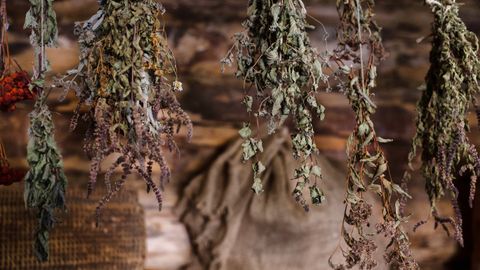
Glycyrrhiza glabra, licorice or yashtimadhu, appears in a large number of classical Ayurvedic formulations, frequently as a supporting ingredient. It is also widely used in traditional Chinese medicine and as a confectionery and flavouring.
It has genuine pharmacological activity, some documented benefit, and a well-characterised and serious adverse effect profile that makes it one of the herbal products most worth being careful about.
The adverse effect, first
Glycyrrhizin, the principal active compound, inhibits an enzyme that normally protects the mineralocorticoid receptor from cortisol.
The consequence is a state resembling excess mineralocorticoid activity: sodium and water retention, potassium loss, raised blood pressure and, in severe cases, metabolic alkalosis and muscle weakness.
This is not a theoretical concern. Cases of severe hypertension, hypokalaemia, cardiac arrhythmia, muscle breakdown and, in reported cases, death associated with licorice consumption appear in the medical literature.
Regulatory bodies in several countries have issued advice on licorice consumption limits, and food safety authorities have set guidance on daily glycyrrhizin intake.
Importantly, the amounts involved are achievable through ordinary consumption — of licorice confectionery, licorice tea, or herbal preparations containing it — rather than requiring unusual doses.
Who is at particular risk
Anyone with hypertension, heart disease, kidney disease, or liver disease.
Anyone taking diuretics, particularly loop or thiazide diuretics, where the potassium-lowering effects add.
Anyone taking digoxin, where low potassium increases toxicity risk.
Anyone taking corticosteroids.
Pregnant women — high licorice consumption in pregnancy has been associated in cohort studies with adverse outcomes in offspring.
Individual sensitivity varies considerably, and some people develop effects at doses others tolerate.
Deglycyrrhizinated licorice
A preparation with the glycyrrhizin removed, which avoids the mineralocorticoid effects.
It is used specifically for upper gastrointestinal indications and it is the safer form for that purpose. It also lacks whatever activity glycyrrhizin contributes.
If you are considering licorice for digestive purposes, this is the form to ask about.
Where there is evidence of benefit
Peptic ulcer and dyspepsia. Older research on licorice derivatives for ulcer disease exists, and deglycyrrhizinated licorice has some evidence for dyspepsia. The advent of effective acid-suppressing drugs and of H. pylori eradication has made this largely of historical interest, and those treatments have far better evidence.
Sore throat and cough. Traditional use is extensive and there is some evidence, including studies on licorice gargle for post-operative sore throat.
Topical use for skin conditions, with some studies on licorice extract preparations in eczema.
Aphthous ulcers, with some small studies.
In most of these the evidence is modest and the alternatives are better established.
Why it appears in so many formulations
In classical practice, licorice is frequently included as a harmonising or supporting ingredient rather than as the principal active component — a role it also has in traditional Chinese formulations.
The practical consequence is that someone taking a multi-ingredient Ayurvedic preparation may be taking licorice without knowing, and over an extended period.
Which is one of several reasons to read ingredient lists and to be cautious of formulations that do not state quantities.
What to watch for
If you consume licorice regularly, in any form, be alert for: raised blood pressure, swelling of ankles or face, muscle weakness or cramps, headache, and unusual fatigue.
These indicate the mineralocorticoid effect and warrant stopping and seeking medical advice, including a check of blood pressure and potassium.
Effects generally resolve after stopping, over weeks.
The general lesson
Licorice is among the clearest counterexamples to the assumption that traditional and food-adjacent substances are benign.
It has a well-understood mechanism, a documented dose-response relationship, a defined at-risk population and published fatalities — which is more than can be said for most herbal safety concerns, and it is taken far less seriously than it should be.
It also illustrates why ingredient lists matter. A person avoiding licorice deliberately can easily consume it through a formulation, a tea or a sweet without knowing.
Do not consume licorice regularly if you have high blood pressure, heart, kidney or liver disease, or take diuretics, digoxin or corticosteroids. Check the ingredients of multi-herb formulations. Seek medical advice for swelling, muscle weakness or raised blood pressure while taking it.
Also by Sanjay Iyer
- The placebo question, taken seriouslyEvidence Watch
- Diuretic herbs and the kidneyHerbs & Formulations
- Yoga injuries and how to practise without acquiring oneYoga & Breath
- Arjuna and the heart claimsHerbs & Formulations