Herbs & Formulations
How A Supplement Facts Panel Describes An Ayurvedic Product
The panel on an Ayurvedic product sold in the United States was designed for vitamins, and the mismatch explains most of what the label does and does not disclose.
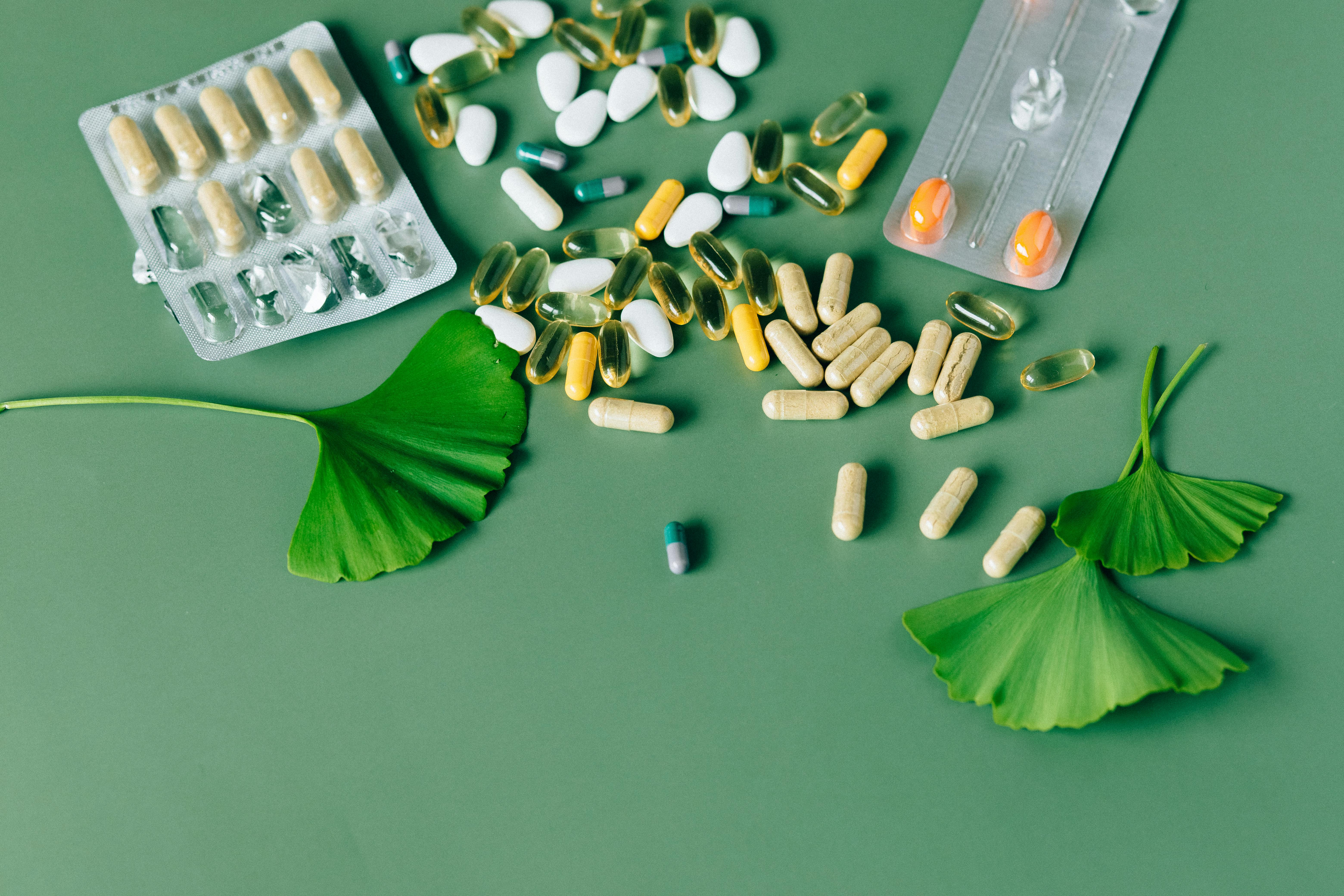
An Ayurvedic product sold in an American store carries a label format that was designed for vitamins and minerals rather than for classical formulations. The mismatch explains much of what the package tells you and much of what it leaves out.
What the panel is required to show
Federal rules treat these products as dietary supplements, so the container carries a Supplement Facts panel that lists each ingredient and the amount in a serving. The format is fixed and the order is prescribed.
Ingredients that have no established daily reference value appear with a quantity but no percentage column beside them. Most botanicals sit in that group, which is why so much of the panel looks empty.
Below the panel sits an "other ingredients" line covering capsule material, fillers and flow agents. None of that is part of the formulation in any traditional sense, but it is part of what a person swallows.
Where a classical formula does not fit the format
A traditional compound is described by its proportions, its method of preparation and the liquid it was processed in. The panel has nowhere to record any of that, so it records weights instead.
A decoction reduced over hours and a dry powder of the same plants are treated as different preparations by the tradition. On a US label both may appear simply as the plant name followed by a weight.
Combination products are often listed as a proprietary blend carrying one total weight. That is permitted under the rules, and it means the proportions of the individual plants are not disclosed to the buyer.
Plant names and the identification problem
Labels usually give a common name, sometimes a Sanskrit one, and ideally the Latin binomial. Only the binomial identifies a species, and several traditional names map onto more than one plant.
The part of the plant matters as much as the species does. Root, leaf, fruit and bark differ in composition, and a careful label states which part the raw material came from.
Where a panel names an extract it may give a concentration ratio or a marker compound. Those figures describe how the material was made, not how strongly it acts in a person.
What the panel cannot tell you
There is no premarket approval for these products, so nothing printed on the box represents a finding by any agency that the contents are effective or safe.
Purity and heavy-metal content do not appear on the panel at all. Independent testing programs address that question separately, and participation in them is voluntary.
Claims printed on the front of the package fall under a different set of rules and carry a required disclaimer. The panel and the marketing copy are doing two different jobs.
Reading it alongside medical care
The panel is most useful as an inventory to show a physician or pharmacist, particularly where prescription medicines are already involved. Botanical ingredients can interact with drugs in ways a label will not warn about.
Anyone considering a traditional preparation for a diagnosed condition needs a licensed clinician in the conversation. A label is a description of contents, not a substitute for that.
Read as an inventory rather than a recommendation, the panel does the one thing it was built to do: state what is in the container and how much of it.
Also by Sanjay Iyer
- The placebo question, taken seriouslyEvidence Watch
- Diuretic herbs and the kidneyHerbs & Formulations
- Yoga injuries and how to practise without acquiring oneYoga & Breath
- Arjuna and the heart claimsHerbs & Formulations