Herbs & Formulations
Ginger: the traditional remedy with the best nausea evidence
Among all the botanicals used across traditional medicine systems, ginger has some of the most consistent clinical trial support — for one particular indication.
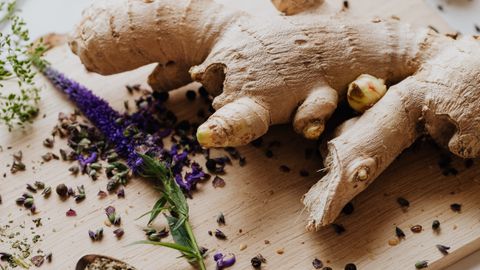
Ginger, Zingiber officinale, is used across Ayurveda, traditional Chinese medicine and many folk traditions, principally for digestive complaints.
It is also one of the few botanicals where the clinical evidence for a specific indication is genuinely reasonable.
Nausea and vomiting
Pregnancy. The best-supported use. Multiple randomised trials and several systematic reviews have found ginger effective for reducing nausea in early pregnancy compared with placebo, with effects on vomiting less consistent.
It appears in clinical guidance in several countries as an option for mild to moderate nausea and vomiting in pregnancy, and professional bodies have generally regarded it as reasonable to try.
Safety in pregnancy has been examined and studies have not found increased risk of adverse outcomes at the doses used. As with anything in pregnancy, discuss it with your midwife or doctor, particularly regarding dose and duration.
Severe or persistent vomiting in pregnancy — hyperemesis gravidarum — is a medical condition requiring assessment and treatment, and ginger is not appropriate management for it.
Postoperative nausea. Studies exist with mixed results, and reviews have been more cautious than for pregnancy.
Chemotherapy-induced nausea. Trials have produced inconsistent results. Anyone undergoing chemotherapy should discuss any supplement with their oncology team, since interactions and bleeding risk are real considerations.
Motion sickness. Evidence is mixed. Some trials find benefit, others do not, and comparison with established antiemetics generally favours the pharmaceutical.
Other uses
Osteoarthritis pain. Some trials report modest reductions in pain. Reviews have described the evidence as showing small effects with quality limitations.
Menstrual pain. A small number of trials report effects comparable to non-steroidal anti-inflammatory drugs. Sample sizes are small.
Digestive effects. Ginger accelerates gastric emptying in some studies, which is a plausible mechanism for its traditional use in dyspepsia. Clinical trials in functional dyspepsia are limited.
Metabolic and inflammatory markers. Studies exist with inconsistent results.
Safety
Culinary use is unremarkable. Concentrated supplements have a few considerations.
Bleeding risk. Ginger has antiplatelet activity in some studies. Relevant for anyone on anticoagulants or antiplatelet drugs, and before surgery. The clinical significance at dietary doses is probably small; at supplement doses it warrants discussion with a prescriber.
Reflux and gastric irritation. Ginger can worsen reflux in some people, which is worth knowing given that it is often recommended for digestive complaints generally.
Gallstones. May increase bile flow; caution advised in gallstone disease.
Blood glucose. Some evidence of glucose-lowering effects, relevant for anyone on diabetes medication.
Dose. Trials commonly use around one gram to a gram and a half daily of dried powder, in divided doses. Higher doses increase the likelihood of gastric irritation.
Fresh, dried and preparations
Fresh and dried ginger differ in composition — drying converts some gingerols into shogaols, which have different activity. Traditional systems distinguish between them and assign different properties, which corresponds to a real chemical difference.
Most clinical trials use dried powdered root or standardised extracts. Ginger tea, crystallised ginger and ginger biscuits deliver variable and generally much lower amounts, and the last is mostly biscuit.
The classical framing
Ayurvedic texts distinguish fresh ginger from dried and assign them different properties, dried being described as more heating and more penetrating. That distinction corresponds to a real chemical difference, which is a reasonable correspondence to note.
Ginger also appears in the classical trikatu combination alongside black pepper and long pepper, used to support digestion and, in traditional reasoning, to improve the action of other preparations. Piperine from pepper does affect the absorption of some compounds, which gives that combination a partial modern rationale.
Why this case is instructive
Ginger illustrates what a reasonable evidence base for a traditional remedy looks like, and it is worth noting how narrow it is.
There is decent support for one indication — nausea in pregnancy — where multiple independent trials point the same way and reviews concur, and where it appears in mainstream clinical guidance.
Everything else is weaker, and the traditional use is much broader than the evidence.
That pattern — a small well-supported core surrounded by a much larger set of traditional and marketed claims — is what most botanicals look like when examined carefully. Ginger is unusual in having a core at all.
Persistent nausea and vomiting requires medical assessment. In pregnancy, discuss any supplement with your midwife or doctor. If you take anticoagulants or are due surgery, mention ginger supplementation to your clinician.
Also by Sanjay Iyer
- The placebo question, taken seriouslyEvidence Watch
- Diuretic herbs and the kidneyHerbs & Formulations
- Yoga injuries and how to practise without acquiring oneYoga & Breath
- Arjuna and the heart claimsHerbs & Formulations