Daily Routine
Dinacharya: the daily routine, item by item
The classical daily regimen is a long list of practices. Some are ordinary hygiene, some have interesting evidence behind them, and a few are worth being sceptical about.
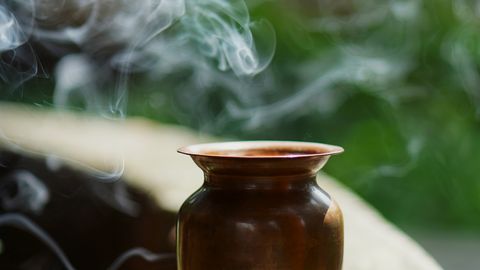
Dinacharya is the classical daily routine — a sequence of practices from waking to sleeping, set out in the classical texts and elaborated by later commentators.
It is one of the parts of Ayurveda most people encounter first, and it is worth going through the components honestly, separating ordinary sensible practice from things that carry specific claims.
Waking early
The texts recommend rising in the period before dawn, described as conducive to clarity.
What can be said with confidence is that consistent wake times support circadian regulation, and that morning light exposure is the strongest signal for circadian timing. Both are well supported and both are achieved by rising at a consistent early hour.
Whether there is anything specific about the pre-dawn period beyond that is not established, and individual chronotype varies genuinely — some people function poorly on early rising regardless of habituation.
Elimination
A regular morning bowel movement is encouraged, supported by drinking water on waking.
Adequate hydration and regular timing are reasonable for bowel regularity, and the gastrocolic reflex means that eating or drinking does stimulate colonic activity. Nothing controversial here.
Oral care
Tongue scraping. Classical practice, using a metal or wooden scraper. There is modest evidence that tongue cleaning reduces the bacterial load on the tongue surface and reduces volatile sulphur compounds associated with bad breath. It is cheap, harmless if done gently, and reasonably supported for that specific purpose.
Oil pulling. Swishing oil in the mouth. Studies have been conducted, mostly small and frequently of limited quality, with some reporting reductions in plaque and gingivitis measures. Dental bodies have generally taken the position that the evidence is insufficient to recommend it as a replacement for brushing and flossing, and there is no reason to consider it one.
It is unlikely to be harmful if the oil is not swallowed. A small number of case reports describe lipoid pneumonia from aspiration, which is rare and worth knowing about.
Chewing sticks. Traditional use of neem or other twigs for cleaning teeth. Some studies suggest antimicrobial activity, and the mechanical action is the main effect. A toothbrush is easier.
Nasal practices
Nasya — applying oil in the nostrils — is classical practice with limited direct evidence.
Saline nasal irrigation, which is related in principle, has reasonable evidence for symptom relief in chronic rhinosinusitis and allergic rhinitis and is recommended in some clinical guidelines.
An important safety point: nasal irrigation must use sterile, distilled or boiled and cooled water. Rare but fatal infections have occurred from use of untreated tap water, and this is a genuine and documented risk rather than a theoretical one.
Abhyanga: self-massage with oil
Classical practice, generally with warm oil, before bathing.
Evidence specific to abhyanga is limited. Related evidence is more supportive: massage has reasonable evidence for short-term reduction in anxiety and perceived stress, and emollient application benefits skin barrier function, particularly in dry skin conditions.
It is pleasant, low-risk, and requires a warm room and time. Use oil appropriate to your skin; sesame is classical and some people react to it.
Exercise
The texts recommend exercise to a defined limit rather than to exhaustion, with the classical guidance being to stop at around half one's capacity, indicated by the appearance of sweat on the forehead and moisture in the armpits, and by breathing through the mouth.
This is more conservative than contemporary exercise recommendations, which support higher intensities for cardiovascular and metabolic benefit. It is a reasonable general principle for people who are unwell, deconditioned or elderly, and it should not be used as an argument against training if you are healthy and want to.
Meals and evening
Largest meal at midday, lighter evening meal, eaten early, followed by a short walk. Sleeping at a consistent time.
All of this is compatible with mainstream advice, and the meal timing element has some supporting evidence in the chrononutrition literature, which is developing rather than settled.
How to approach the whole thing
The routine as a package has not been trialled and probably cannot be usefully trialled, since it is a lifestyle rather than an intervention.
What it contains is a set of practices, several of which are individually reasonable, and one organising principle — regularity — which has good general support.
The sensible approach is to adopt what is practical and evidence-supported, treat the rest as optional, and not to treat any of it as a substitute for medical care. Adding five practices you will abandon in a fortnight achieves less than adopting one you will keep.
Nasal irrigation requires sterile or boiled water. Consult a doctor about any new or persistent symptom rather than managing it with routine alone.
Also by Meera Kulkarni
- Breath practice for anxiety: the specific thing to doYoga & Breath
- Cooking oils: the classical selections and the current evidenceDiet & Digestion
- Drinking with meals, and the classical instructions about waterDiet & Digestion
- The evening routine and winding downDaily Routine