Herbs & Formulations
Cardamom, Clove And The Aromatic Spices In Formulation
Aromatic spices appear throughout classical formulas in small quantities, where the tradition assigns them roles as correctives and carriers rather than as the active material.
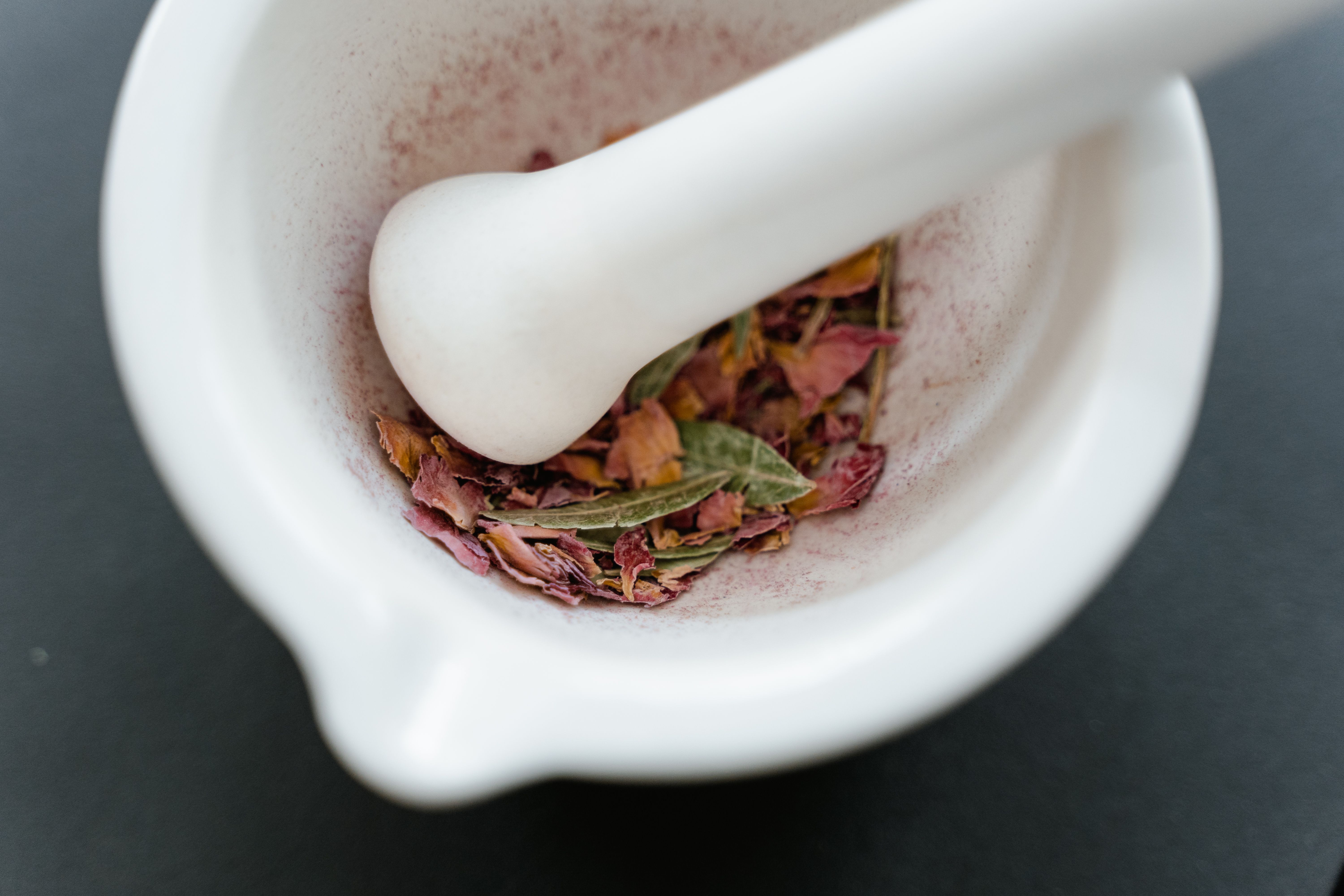
Classical formulations are full of aromatic spices in small quantities alongside larger amounts of roots, barks and fruits. The tradition assigns those small components specific jobs rather than treating them as filler.
How the texts categorise aromatics
Spices dominated by volatile oils are grouped by taste and by their described effect on digestion. Pungent and bitter tastes appear repeatedly in this group, with sweetness rarer.
Cardamom, clove, cinnamon bark, black pepper and long pepper recur across many formulas. Their frequency reflects a functional role, not simply availability in the regions where the texts were composed.
The classical description of them centres on digestive fire, on the movement of substances through channels, and on the handling of accumulated residues. Those are the tradition's terms, not physiological findings.
The corrective role in a compound
Many formulas include a spice specifically to offset a property of the main ingredient, such as heaviness or a tendency to cause griping. The texts describe this as correction rather than addition.
A related role is palatability. A bitter decoction is more likely to be finished if an aromatic is present, and traditional pharmacy took compliance seriously long before the word existed.
Preservation is a third function. Volatile oils in clove and cinnamon have antimicrobial activity that is well documented in food science, which matters for preparations stored without refrigeration.
Where modern chemistry lines up
Black pepper contains piperine, which has been shown to slow the metabolism of certain compounds and raise their blood levels. That is a genuine pharmacological effect with a genuine research basis.
It is also a two-sided finding. The same mechanism that raises the level of a plant compound can raise the level of a prescription drug, which is an interaction risk rather than a benefit.
For most other aromatics, the modern data concerns laboratory activity of isolated oils. Extrapolating that to the pinch of spice in a formula is not supportable.
Culinary use is not the same as medicinal use
Spices in cooking appear in quantities familiar to any kitchen and have a long record of ordinary use. Concentrated essential oils are a different material with different risks entirely.
Clove oil in particular is potent, and ingesting it is not equivalent to using the whole spice. Case reports of harm from concentrated oils exist and are not obscure.
The tradition itself distinguishes food from medicine by quantity and preparation, which is a distinction worth carrying forward rather than blurring.
What this explains about ingredient lists
A long ingredient list with several spices near the end is not padding. In the tradition's own logic, each small component is answering a property of a larger one.
That logic is internally coherent and largely untested by modern methods, because trials study whole formulas rather than the contribution of a single corrective ingredient.
Anyone using such preparations alongside prescription medicine should raise them with a pharmacist, since pepper-containing formulas in particular have a plausible route to interaction.
Also by Sanjay Iyer
- The placebo question, taken seriouslyEvidence Watch
- Diuretic herbs and the kidneyHerbs & Formulations
- Yoga injuries and how to practise without acquiring oneYoga & Breath
- Arjuna and the heart claimsHerbs & Formulations