Diet & Digestion
Leftovers And The Classical Preference For Fresh Cooking
The texts treat stale food as its own category and discourage it regardless of storage, while modern food safety measures time and temperature instead of freshness.
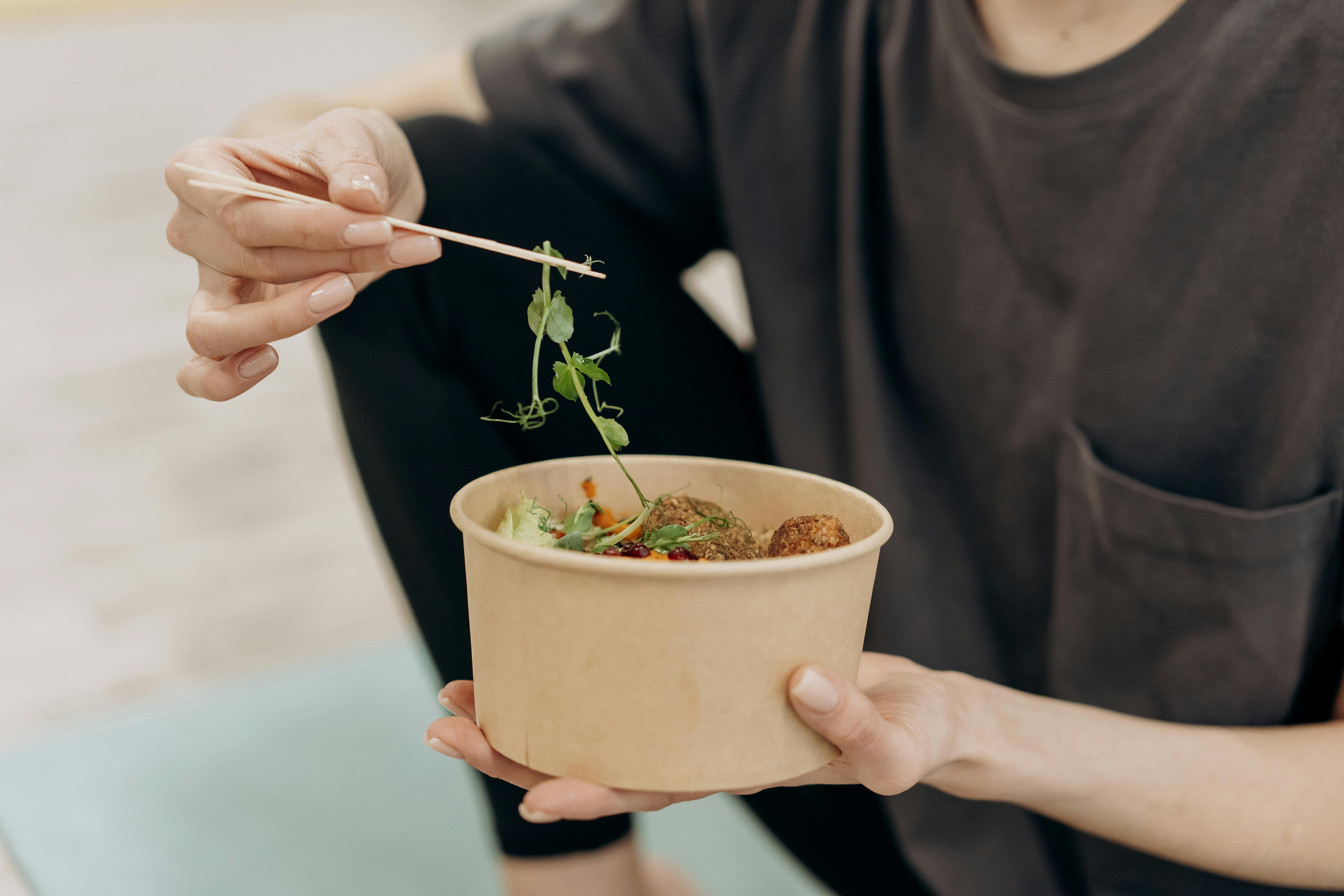
The classical texts are unusually insistent that food be eaten freshly cooked, and treat stale food as a category of its own. The instruction has both a traditional rationale and a food safety reading.
The classical objection to stale food
Food kept beyond its cooking is described as losing its vital quality and gaining heaviness, becoming harder to digest and more likely to leave residue behind.
That residue, ama, is the tradition's term for incompletely digested material said to accumulate and obstruct the channels. It is a conceptual entity rather than a measurable one.
The instruction is therefore not a hygiene rule in origin. It follows from a model in which freshness is itself a property of the food.
What food science says about reheating
Cooked food left at ambient temperature supports bacterial growth, and some foods, rice in particular, are associated with a spore-forming organism that survives cooking.
Refrigeration slows this considerably, which is why modern advice is framed around temperature and time rather than around freshness as such.
The traditional rule was formed in a warm climate without refrigeration. Read in that setting it is a sensible safety heuristic expressed in the vocabulary available.
Where the two accounts diverge
Modern guidance permits properly cooled and reheated food. The classical position discourages it regardless of storage, because the objection is to the food's changed nature.
There are also foods the tradition holds to improve with keeping, such as ghee and certain fermented preparations, so the rule is not simply that older is worse.
Those exceptions matter, since they show the framework distinguishing decay from transformation rather than merely counting hours since cooking.
Nutrient loss is real but modest
Reheating does degrade some vitamins, particularly heat-sensitive ones such as vitamin C and several B vitamins, and repeated reheating compounds the loss.
The magnitude is generally small relative to what a mixed diet supplies overall, and the fat, protein and mineral content is essentially unchanged.
So the nutritional case for fresh cooking is real but far weaker than the traditional rhetoric, and it does not justify discarding safely stored food.
How the rule works in practice
In households that follow it, the instruction shapes the cooking rhythm: smaller quantities more often, with the midday meal cooked rather than carried over.
That has real costs in time and fuel, which is why the strict form is commoner where cooking labour is available than where it is not.
The defensible version is to cool and reheat carefully, cook in sensible quantities, and treat rice and cooked pulses with more caution than most other foods.
Also by Dr. Anjali Deshmukh
- Using both: how to combine Ayurveda with conventional careDosha & Constitution
- Children: traditional practices and what to be careful aboutDaily Routine
- Choosing a practitioner: what to look for and what to askEvidence Watch
- Mind in the classical framework, and mental health care nowDosha & Constitution