Daily Routine
Eye practices in classical routine, and what is actually good for eyes
The daily routine includes several practices directed at the eyes. Some are harmless, one requires real caution, and the interventions with the best evidence are elsewhere.
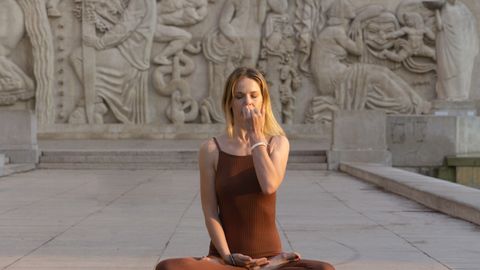
Classical dinacharya includes practices directed at the eyes, and eye care has a defined place in the tradition, including a specialised branch dealing with conditions above the neck.
Several practices are described, and they warrant different levels of caution.
Washing the eyes
Splashing the eyes with cool water is described in the daily routine and is generally harmless.
One caution: water used near the eyes should be clean. Tap water is usually fine for splashing the closed eyelids; introducing untreated water directly into the eye is not advisable, and this is particularly relevant for contact lens wearers, for whom water exposure is associated with a rare but serious corneal infection.
Contact lenses should never be rinsed or stored in water, and should be removed before swimming or showering where possible.
Netra tarpana and oil-based eye treatments
A procedure in which a dam of dough is built around the eye and medicated ghee is poured in, with the eye opened and closed within it.
This is a clinical procedure and should only be performed by a trained practitioner in appropriate conditions.
The relevant safety considerations are infection risk from non-sterile materials, chemical irritation from the preparation, and the general principle that anything introduced into the eye carries risk of corneal injury.
Evidence for benefit is limited, comprising small studies with methodological limitations.
Anyone with an eye condition, recent eye surgery, contact lenses, or an active infection should not undergo it without ophthalmological advice.
Kajal and traditional eye cosmetics
This requires a specific warning.
Traditional kohl and kajal preparations, used cosmetically and applied to infants in some traditions, have repeatedly been found to contain high levels of lead.
Public health authorities in several countries have issued warnings, and cases of lead poisoning in children associated with these products are documented in the medical literature.
Products marketed as traditional or handmade are of particular concern. Commercially manufactured cosmetics meeting regulatory standards in countries with cosmetic regulation are a different proposition.
Do not apply traditional kajal to children's eyes. If it has been used regularly, ask your doctor about blood lead testing.
Triphala eye wash
Traditional practice uses triphala decoction as an eye wash.
The considerations are sterility of the preparation and of the vessel, and the general principle above about introducing substances into the eye.
Evidence is limited. Given that the eye is delicate and infections there can threaten sight, this is not a practice to improvise at home with a home-made decoction.
Palming and eye exercises
Covering the closed eyes with the palms, and various eye movement exercises, appear in yogic and Ayurvedic practice.
Palming is harmless and restful.
Eye exercises as a treatment for refractive error — myopia, hypermetropia, astigmatism — do not work. These are structural and optical conditions and there is no evidence that exercises alter them. Systems claiming to eliminate the need for glasses through exercise have been examined and are not supported.
Vision therapy for specific binocular vision disorders, such as convergence insufficiency, is a separate and legitimate clinical area with actual evidence, prescribed by optometrists and orthoptists for specific diagnoses.
What actually protects vision
Worth stating, because it is where the benefit is.
Regular eye examinations, which detect glaucoma, diabetic retinopathy and other conditions before symptoms appear. Glaucoma in particular causes irreversible vision loss silently, and detection is the entire intervention.
Blood glucose and blood pressure control for anyone with diabetes or hypertension, which are among the leading causes of preventable vision loss.
Not smoking, which is a significant risk factor for macular degeneration and cataract.
Ultraviolet protection from sunglasses meeting a proper standard.
Eye protection during activities with impact or chemical risk.
Correct refractive correction, properly prescribed.
Regular breaks from close work, which reduces symptoms of eye strain — the commonly cited pattern of looking at something distant periodically is reasonable, though it does not affect refractive error.
Time outdoors in childhood, which has reasonable evidence for reducing myopia progression in children.
When to seek urgent care
Sudden vision loss, sudden onset of floaters or flashes, a curtain across vision, severe eye pain, eye pain with nausea and halos around lights, a red painful eye, or any injury to the eye.
All of these are urgent. Several are sight-threatening within hours.
Sudden visual changes require urgent assessment. Do not apply traditional kajal to children. Do not use home-made preparations in the eye.
Also by Dr. Anjali Deshmukh
- Using both: how to combine Ayurveda with conventional careDosha & Constitution
- Children: traditional practices and what to be careful aboutDaily Routine
- Choosing a practitioner: what to look for and what to askEvidence Watch
- Mind in the classical framework, and mental health care nowDosha & Constitution