Dosha & Constitution
Desha And Kala, The Place And Time In A Reading
Classical assessment weighs the place a person lives and the time in their life and year, treating both as modifiers that sit alongside constitution rather than inside it.
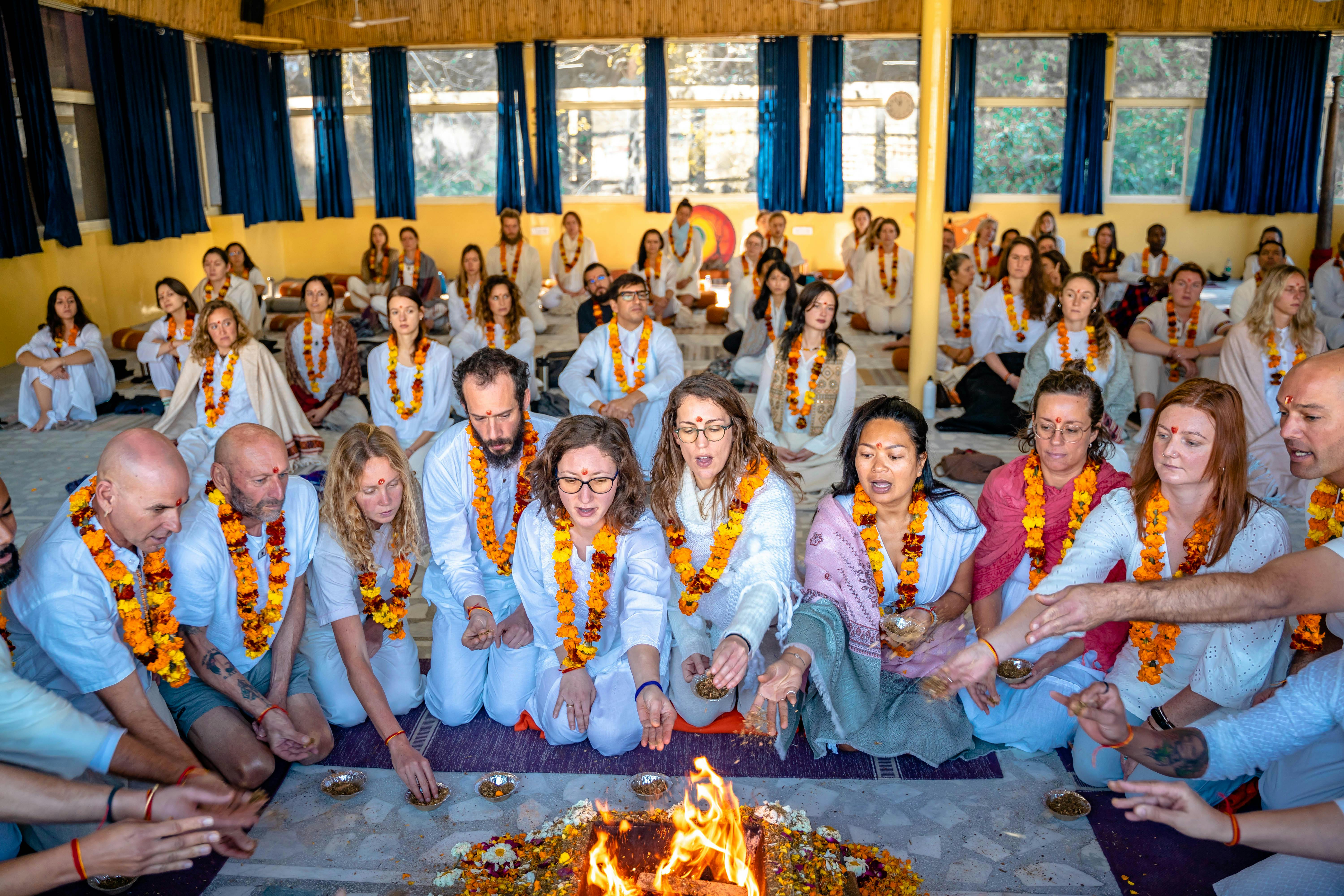
Classical assessment does not read a person in isolation. Two named factors, desha and kala, place the person in a geography and in a moment, and both modify what the reading means.
What desha covers
Desha means place, and the texts use it in two senses at once: the terrain a person lives in and the site in the body where a disturbance appears.
The geographic sense divides land into broad types described by their moisture and vegetation, each associated with characteristic dosha tendencies in the people living there.
The bodily sense identifies where a process is occurring, which the classical framework treats as diagnostically important because the same disturbance is described differently in different tissues.
What kala covers
Kala means time, and it operates at three scales: the hour of the day, the season of the year and the stage of a person's life.
Each scale is assigned a dosha emphasis, so a child, a working adult and an older person are read against different expectations even with the same constitution.
Kala also includes the stage of a disorder itself, since the classical account of disease describes a sequence of stages rather than a single state.
Why these are separate from constitution
Constitution is described as fixed, while place and time change. Keeping them separate is what allows a practitioner to explain why a person presents differently at different points.
Without those modifiers the framework would predict that a given constitution always produces the same picture, which is plainly not what anyone observes.
This is the same move modern clinical reasoning makes when it adjusts a reference range for age, or reads a result differently in a pregnant patient.
How the factors apply to American life
A person who has moved from Florida to Colorado has changed altitude, humidity and light exposure simultaneously, which the framework would treat as a change in desha.
Life stage lines up loosely with the classical scheme, but American patterns of work, retirement and life expectancy differ from the assumptions behind the original divisions.
Applying the categories mechanically to a modern American life produces awkward results. Applying the underlying question, what conditions is this person actually living in, does not.
The limits of the framework here
None of these factors are measured. They are described, weighted by a practitioner and combined by judgement, which is why readings differ between assessors.
They also carry no predictive validity that has been formally tested. The framework is coherent internally without having been shown to forecast anything.
Any symptom that changes with place, season or age can also have a specific medical cause, and distinguishing the two is a job for a licensed clinician rather than a constitutional reading.
Also by Dr. Anjali Deshmukh
- Using both: how to combine Ayurveda with conventional careDosha & Constitution
- Children: traditional practices and what to be careful aboutDaily Routine
- Choosing a practitioner: what to look for and what to askEvidence Watch
- Mind in the classical framework, and mental health care nowDosha & Constitution