Herbs & Formulations
Chyawanprash: What Is Actually In The Jar
The best known Ayurvedic preparation is a cooked amla pulp carrying dozens of herbs, sugar, ghee and honey, and its method reveals more than its marketing does.
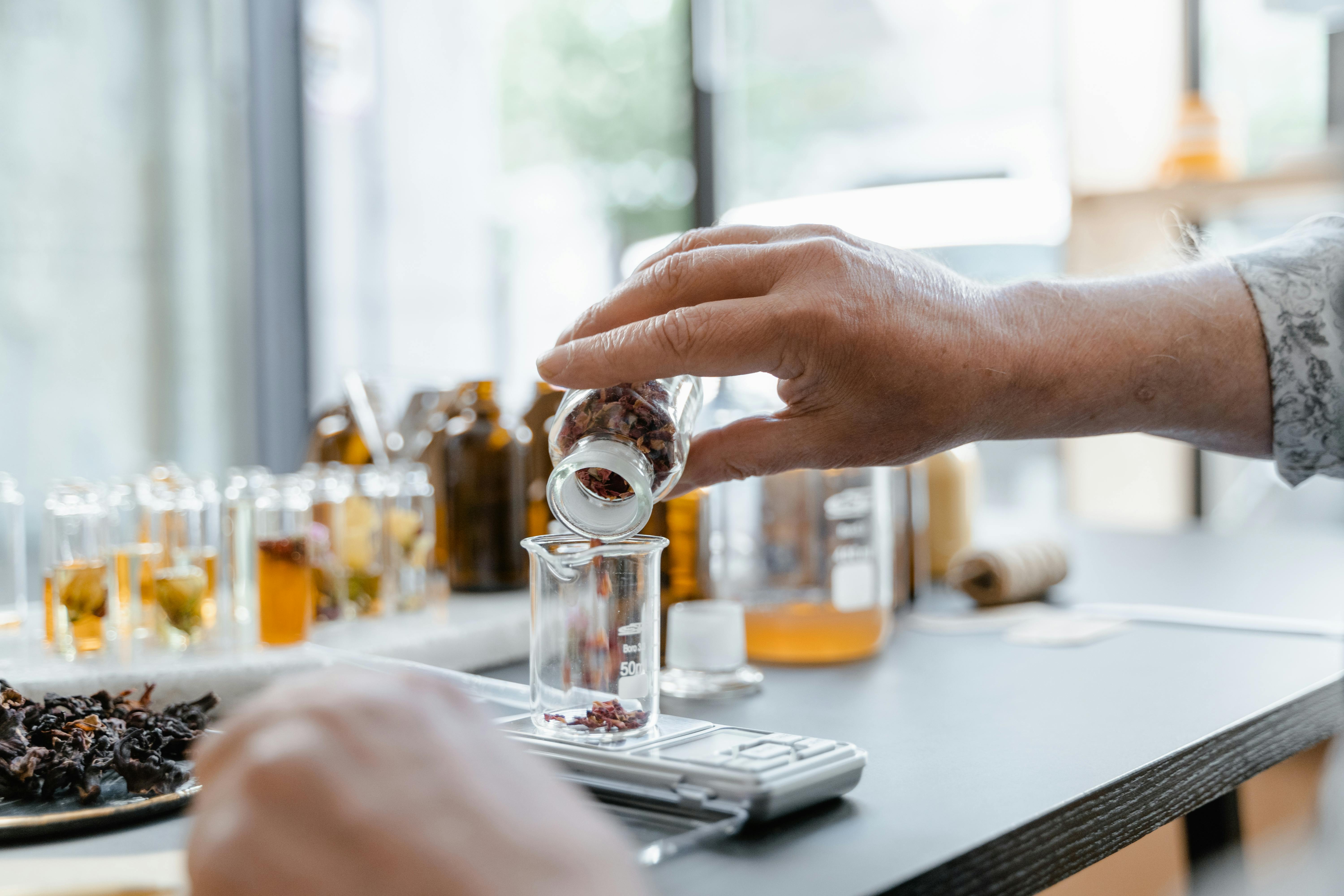
Chyawanprash is the most widely sold Ayurvedic preparation in India, a dark herbal jam eaten by the spoonful. Its composition and its manufacture explain more about the tradition than its marketing does.
The base is amla, cooked and reduced
The bulk of the preparation is Indian gooseberry, amla, boiled until soft and then pressed into a pulp that carries everything added afterwards.
Amla is among the more vitamin C rich fruits eaten in South Asia, though prolonged cooking degrades much of that vitamin. The tradition valued the fruit for reasons that long predate any vitamin.
What remains after cooking is a sour, tannin-heavy pulp. That pulp gives the finished product its dark colour and its slightly astringent bite.
The supporting herbs form a long list
Classical formulas name dozens of herbs decocted with the amla, among them bala, pippali, cardamom, cinnamon and a range of aromatic roots and barks.
These are boiled to produce a decoction which is then reduced. Individual quantities are small, and the formula is understood in traditional terms as a whole rather than as a set of active ingredients.
Commercial versions vary considerably in which herbs they include and in what proportion. Two jars carrying the same name may not hold the same preparation.
Sugar, ghee and honey do structural work
Sugar or jaggery is added in quantity, which makes the finished product a confection as much as a medicine and preserves it without refrigeration.
Ghee and sesame oil are stirred in as the mixture thickens. Fat carries the fat-soluble constituents of the herbs and gives the paste its characteristic texture.
Honey is generally added late, once the mass has cooled, because the classical texts are emphatic that honey should not be heated.
What is claimed, and what is established
The traditional description places it among the rasayana preparations, a category associated with vitality and resilience rather than with treating any named disease.
Research on the finished formula is limited, mostly small, and largely conducted where the product is manufactured. It does not establish the immune claims commonly attached to it.
What can be said plainly is that this is a sweet, calorie-dense food containing herbs. Anyone managing blood sugar should treat it as such and raise it with a clinician.
Why the preparation method matters
The sequence — decoct, reduce, sweeten, add fats, add honey once cool — is not arbitrary. Each step extracts or preserves something specific.
Water pulls out tannins and glycosides, fat pulls out resins and volatile oils, and sugar stabilises the result. The method is a practical extraction technology.
Reading it that way explains why the tradition is so specific about process. A formula is a set of instructions for making something, not merely a list of plants.
Also by Dr. Anjali Deshmukh
- Using both: how to combine Ayurveda with conventional careDosha & Constitution
- Children: traditional practices and what to be careful aboutDaily Routine
- Choosing a practitioner: what to look for and what to askEvidence Watch
- Mind in the classical framework, and mental health care nowDosha & Constitution