Daily Routine
Abhyanga and panchakarma: what these procedures involve
Ayurvedic therapies range from a gentle oil massage anyone can do at home to medical procedures that require supervision and are not appropriate for everyone.
Ayurvedic bodywork and purification therapies are frequently presented as a single category of relaxing treatment. They are not. Some are gentle, some are genuine medical procedures, and the distinction matters for safety.
Abhyanga
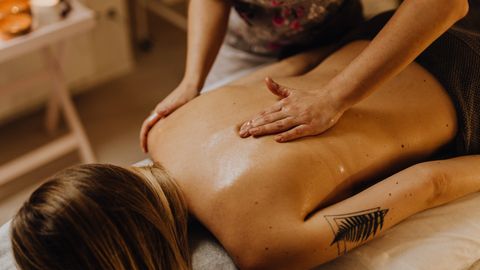
Oil massage, applied to the whole body, generally with warm oil selected according to constitution and season.
It can be done at home as self-massage or received from a therapist. It is low-risk, pleasant, and the most accessible of the traditional practices.
Evidence specific to abhyanga is limited — a small number of studies with methodological limitations. Related evidence is stronger: massage has reasonable evidence for short-term reductions in anxiety and perceived stress, and emollient application benefits skin barrier function.
Practical points: use an oil your skin tolerates, warm it, work with the direction of the limbs, allow time before bathing, and be careful about slippery floors, which is the most common actual injury associated with it.
Avoid over open wounds, active skin infections, during acute illness with fever, and over areas of unexplained swelling or lumps.
Shirodhara
A stream of warm liquid, usually oil, poured continuously onto the forehead.
A number of small studies report effects on anxiety, sleep and autonomic measures. The evidence is limited in quantity and quality, and the procedure is generally low-risk.
Considerations: keeping the oil out of the eyes, hygiene of equipment and oil handling, and the practical difficulty of removing oil from hair afterwards, which is worth knowing in advance.
Swedana
Therapeutic sweating, delivered by steam, herbal steam boxes, hot fomentation or other means.
Generally comfortable and there are real considerations. Heat exposure affects the cardiovascular system, and steam procedures are not appropriate for people with cardiovascular disease, uncontrolled hypertension, pregnancy or certain other conditions without medical clearance. Dehydration and overheating are real risks in extended treatments.
Panchakarma
This is the category that needs the most care.
Panchakarma refers to a set of five purificatory procedures, undertaken after preparatory measures, traditionally over a period of weeks. The five, in classical enumeration, are therapeutic emesis, therapeutic purgation, two forms of enema, and nasal administration.
These are medical procedures. Therapeutic emesis and purgation induce vomiting and diarrhoea respectively, in a controlled way, using specific preparations.
The relevant safety considerations are the ones that apply to inducing vomiting and diarrhoea in a person: fluid loss, electrolyte disturbance, and risks that are elevated in older people, in those with cardiovascular or kidney disease, in people on diuretics or other medications affecting electrolytes, and in anyone who is already unwell.
Classical texts are themselves clear that these procedures are not appropriate for everyone, and list contraindications explicitly — including pregnancy, extremes of age, severe debility and various conditions.
What the evidence shows
Research on panchakarma exists and is limited. Studies are generally small, frequently uncontrolled, and often conducted at institutions with a commitment to the practice.
Some report changes in various biochemical and clinical measures. The lack of adequate control conditions is a fundamental problem, since these programmes typically involve a residential stay, dietary change, rest, massage, removal from ordinary stressors and substantial attention — any of which could account for reported improvements.
The specific claim that these procedures remove toxins from the body is not supported by any mechanism recognised in physiology, and no study has demonstrated it. The body's actual detoxification systems are the liver and kidneys.
If you are considering it
Tell your doctor. Particularly if you take any prescribed medication, since fluid and electrolyte shifts and reduced absorption can affect drug levels.
Check the practitioner's qualifications. In India, look for BAMS training and appropriate registration. Elsewhere, regulation varies enormously and in many countries there is no protected title, which means anyone may describe themselves as an Ayurvedic practitioner.
Ask what will actually be done, in specific terms, and what preparations will be given. You are entitled to know what you are taking.
Ask about contraindications and whether the practitioner has taken a proper medical history. If they have not asked about your medical conditions and medications, that is a serious warning sign.
Do not stop prescribed medication for a treatment programme. If a practitioner asks you to, stop and speak to your doctor.
Be cautious of residential programmes marketed primarily as wellness tourism, where medical oversight may be limited.
These are medical procedures with real physiological effects. Discuss with your doctor before undertaking any purification programme, particularly if you have cardiovascular, kidney or gastrointestinal disease, diabetes, are pregnant, or take regular medication.
Also by Dr. Anjali Deshmukh
- Using both: how to combine Ayurveda with conventional careDosha & Constitution
- Children: traditional practices and what to be careful aboutDaily Routine
- Choosing a practitioner: what to look for and what to askEvidence Watch
- Mind in the classical framework, and mental health care nowDosha & Constitution