Evidence Watch
Natural does not mean safe: how herbs interact with medicines
Herb-drug interactions are real, some are serious, and the mechanisms are the same ones that produce interactions between pharmaceuticals.
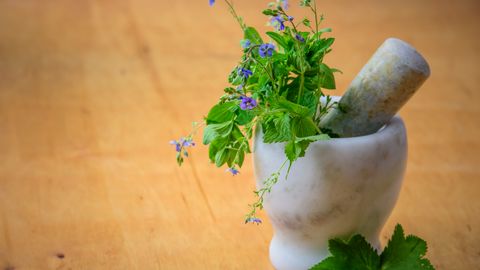
The assumption that plant-derived substances are gentler than pharmaceuticals is widespread and it is not how pharmacology works.
Many pharmaceuticals are plant-derived. Digoxin comes from foxglove, aspirin's precursor from willow, morphine from poppy, several chemotherapy agents from plants. These are not gentle, and their origin is irrelevant to their effects.
The main interaction mechanisms
Effects on drug-metabolising enzymes. The cytochrome P450 enzyme system metabolises a very large proportion of medications. Substances that induce these enzymes speed up drug clearance, reducing drug levels; substances that inhibit them slow clearance, increasing levels and risk of toxicity.
The best-documented herbal example is St John's wort, which induces a major P450 enzyme and reduces levels of a long list of medications including oral contraceptives, immunosuppressants, some antiretrovirals, anticoagulants and several others. Contraceptive failure and transplant rejection attributable to this interaction are documented.
Grapefruit juice, which is not a herbal supplement but illustrates the mechanism, inhibits the same enzyme system and raises levels of a number of drugs.
Effects on drug transporters, particularly P-glycoprotein, which affects absorption and elimination.
Additive pharmacological effects. A herb with mild blood-thinning activity taken alongside an anticoagulant increases bleeding risk. A herb with glucose-lowering activity alongside diabetes medication increases hypoglycaemia risk. A sedating herb alongside sedating medication increases sedation.
These do not require any exotic mechanism — the effects simply add up.
Absorption interference. Tannin-containing preparations can bind medications and minerals; fibre can slow absorption.
The categories of drug where this matters most
Interactions matter most for drugs with a narrow therapeutic window — where the difference between an effective dose and a harmful one is small.
Anticoagulants. Warfarin in particular, where small changes in level produce bleeding or clotting. Many herbal products have documented or theoretical interactions.
Antiepileptics, where reduced levels mean seizures.
Immunosuppressants after transplantation, where reduced levels mean rejection.
Antiretrovirals, where reduced levels mean treatment failure and resistance.
Cardiac medications including digoxin and antiarrhythmics.
Diabetes medication, where additive glucose-lowering causes hypoglycaemia.
Cancer treatments, where interactions can reduce efficacy or increase toxicity. Oncology teams routinely ask about supplements for this reason.
Oral contraceptives, where reduced levels mean unintended pregnancy.
The surgery point
Anaesthetists ask about supplements because several affect bleeding, blood pressure and the response to anaesthetic agents.
General advice is to stop herbal supplements a couple of weeks before planned surgery, and to tell the anaesthetist what you have been taking regardless.
Why the data is incomplete
Systematic interaction studies of the kind conducted for pharmaceuticals have not been done for most herbal products.
What exists is a mixture of case reports, laboratory studies suggesting mechanisms, and a small number of formal interaction studies.
Which means absence of a documented interaction frequently means absence of investigation rather than absence of risk.
Multi-ingredient formulations compound the problem. A preparation containing eight plants has an interaction profile nobody has characterised.
What to do
Tell your doctor and pharmacist everything you take. Including supplements, teas, traditional preparations and anything a practitioner has given you. Bring the packet with the ingredient list.
Surveys consistently find most people do not disclose, generally expecting disapproval. A good clinician wants the information for safety reasons rather than to judge you, and one who responds badly is worth changing.
Ask a pharmacist. Pharmacists are the most accessible source of interaction advice and generally the best informed about it.
Be particularly careful if you take any of the drug categories above.
Introduce one thing at a time, so that any adverse effect is attributable.
Stop and seek advice if something changes — unusual bruising or bleeding, unexpected sedation, changes in your condition's control, or new symptoms after starting a supplement.
Report suspected reactions to your national regulator, which is how the evidence base improves.
The framing worth adopting
A herbal preparation with a genuine effect is, by definition, pharmacologically active. Anything pharmacologically active can interact.
The alternative — that it is entirely safe because it has no meaningful effect — is not the position most people taking it want to hold.
Never stop prescribed medication to take a herbal preparation. Tell every clinician treating you about everything you take, and tell your anaesthetist before any procedure.
Also by Sanjay Iyer
- The placebo question, taken seriouslyEvidence Watch
- Diuretic herbs and the kidneyHerbs & Formulations
- Yoga injuries and how to practise without acquiring oneYoga & Breath
- Arjuna and the heart claimsHerbs & Formulations